RESEARCH RECORD · 17/01/2011From a recorded result to a reproducible laboratory
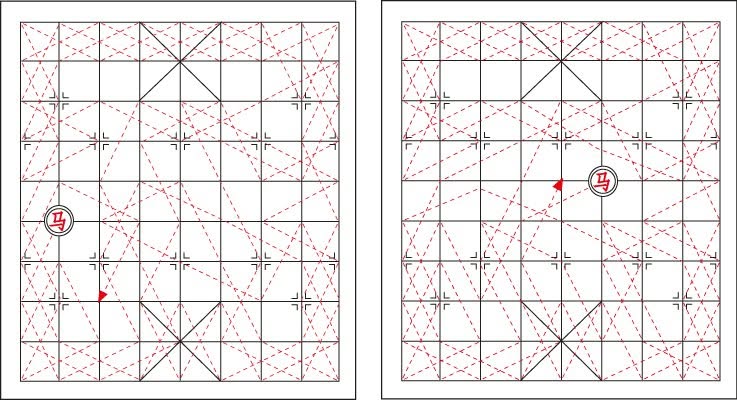
The supplied research record identifies the right image as the author’s recorded closed tour and the left as an open tour produced with the COINCIDENCE Algorithm. It also notes earlier attempts using Warnsdorff’s heuristic. This page preserves that provenance as an author record; the new engine independently validates every generated result rather than treating the historical claim as its proof.
REPRESENTATION & EVALUATION
The same permutation idea, now with 90 positions
A candidate is a permutation of integers 0–89. Position p maps to row ⌊p/9⌋ and column p mod 9. Its fitness counts legal (±1,±2) or (±2,±1) transitions. SNE-COIN fixes the first position, learns a directed 90×90 edge-weight matrix from better and worse candidates, and samples the next generation from legal unvisited destinations. A weak onward-degree prior is exposed in the algorithm name so it is not confused with pure COIN.