Energy story
Chloroplasts capture light and fix carbon into energy-rich molecules. Mitochondria later release usable ATP through respiration. The two organelles exchange matter but perform different transformations.
BOTANY · CELL BIOLOGY · INTERACTIVE ATLAS
Point, click and trace how organelles cooperate: light becomes chemical energy, information becomes protein, and water pressure becomes structure.
INTERACTIVE ANATOMY
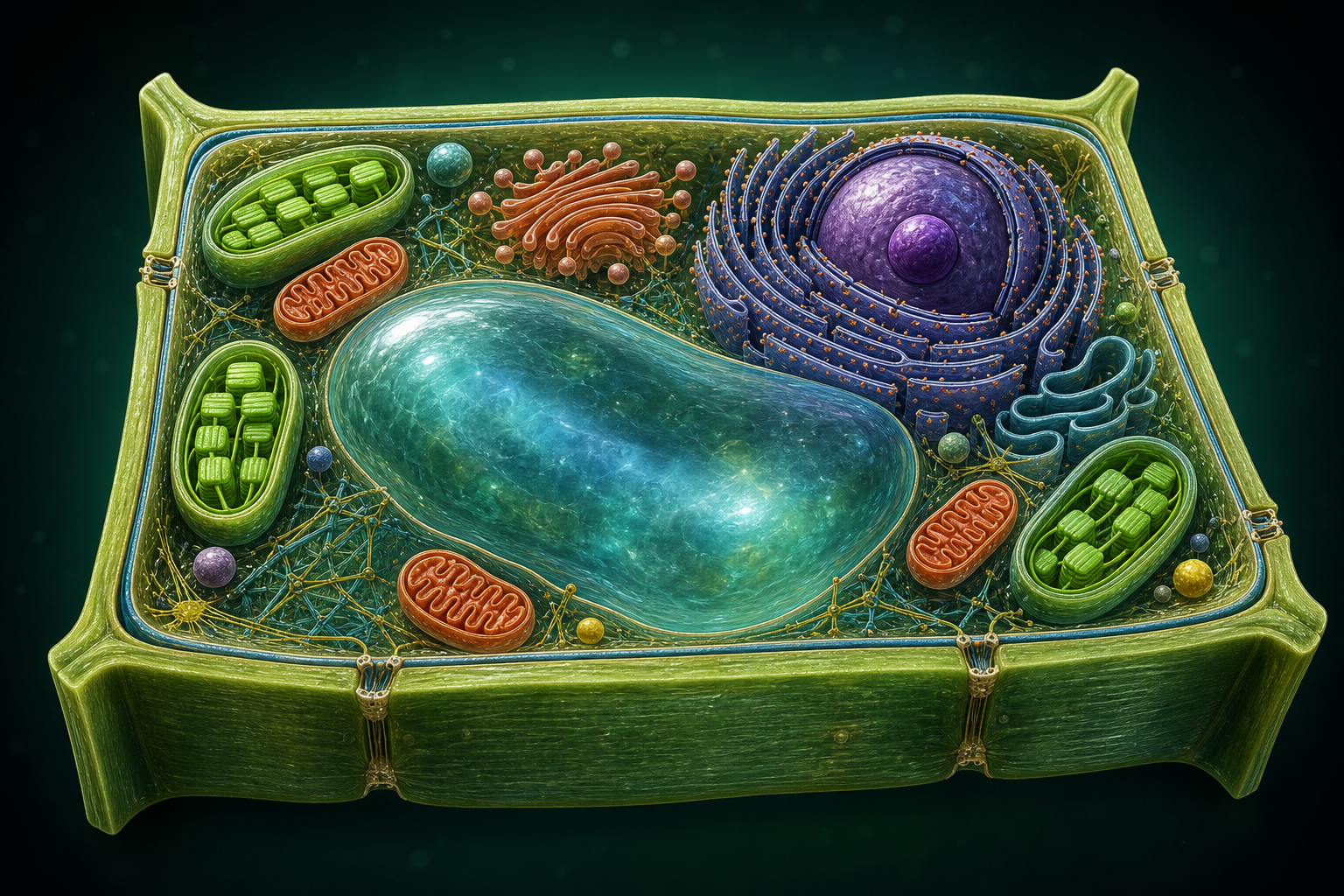
Click the matching marker in the cell.
THREE CONNECTED STORIES
Chloroplasts capture light and fix carbon into energy-rich molecules. Mitochondria later release usable ATP through respiration. The two organelles exchange matter but perform different transformations.
The nucleus protects DNA and produces RNA instructions. Ribosomes translate them; rough ER folds and begins processing proteins; Golgi sorts, modifies and ships the products in vesicles.
Water entering the central vacuole generates turgor pressure. The plasma membrane presses outward, while the cellulose-rich wall resists expansion. Their balance lets soft living tissue stand upright.
PLANT ≠ ANIMAL
Plant cells share nucleus, ER, Golgi, ribosomes and mitochondria with animal cells. Their cellulose wall, plastids and large central vacuole create a different mechanical and metabolic design.
CLASSROOM INVESTIGATION