Information story
DNA stays protected in the nucleus. RNA instructions leave through nuclear pores, ribosomes translate them, rough ER folds the products, and Golgi modifies and sorts them.
ZOOLOGY · CELL BIOLOGY · INTERACTIVE ATLAS
Point, click and follow how DNA becomes protein, membranes move cargo, and metabolism supplies energy for a cell without a wall.
INTERACTIVE ANATOMY
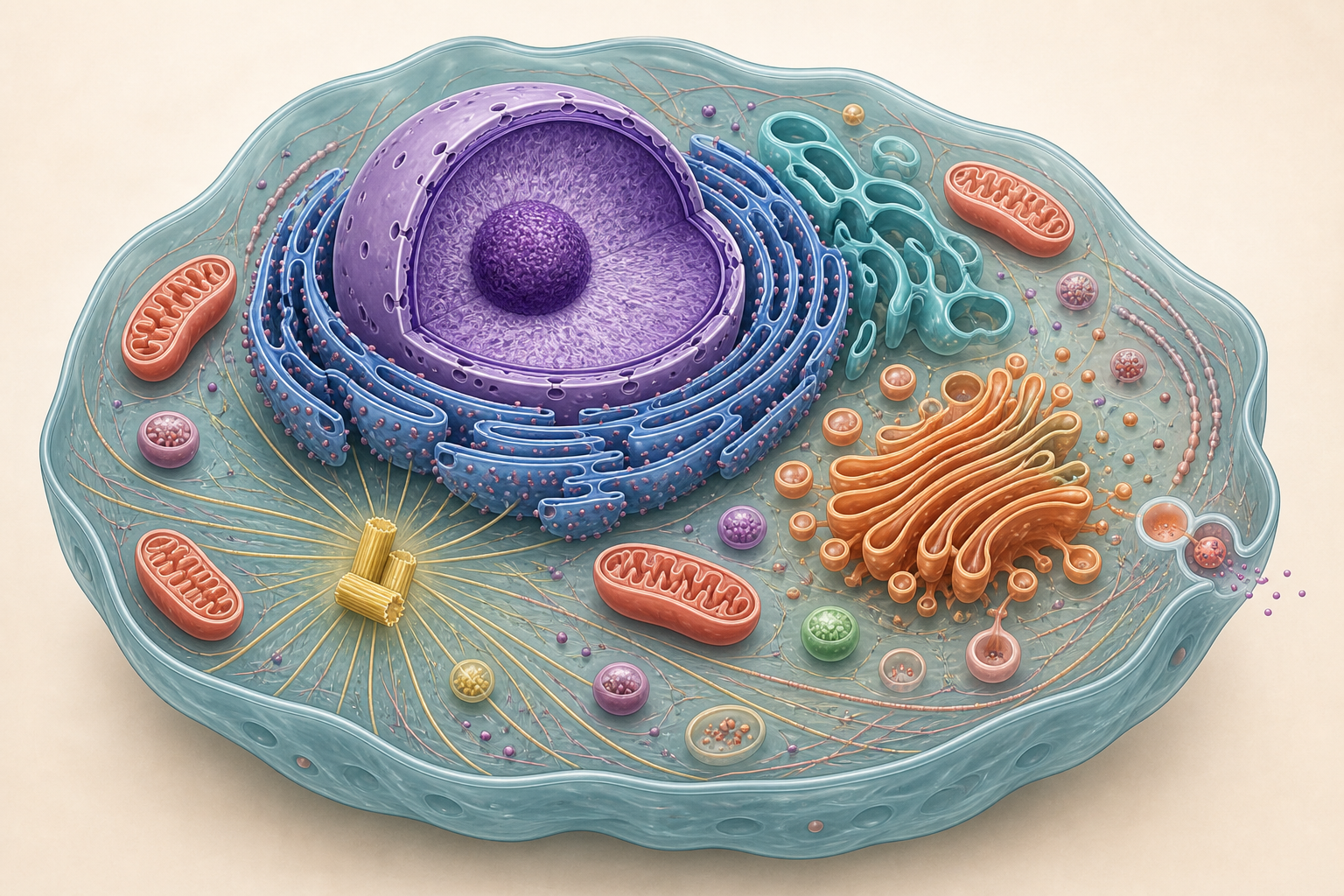
Click the matching marker in the cell.
THREE CONNECTED STORIES
DNA stays protected in the nucleus. RNA instructions leave through nuclear pores, ribosomes translate them, rough ER folds the products, and Golgi modifies and sorts them.
Cytosolic pathways begin extracting energy from nutrients. Mitochondria complete major respiratory steps and couple them to ATP production while peroxisomes handle selected oxidative reactions.
Vesicles bud, travel along the cytoskeleton, recognize a destination and fuse. This traffic renews the membrane, secretes products and delivers material to lysosomes.
GENERALIZED ≠ UNIVERSAL
This composite model collects organelles common to many mammalian cells. A real neuron, muscle cell, epithelial cell or mature red blood cell changes their abundance, arrangement or even presence.
CLASSROOM INVESTIGATION